
Bolivia
Last updated: April 2026


Overview
What remote workers notice first about Bolivia.
Very low cost of living in regional terms — especially outside prime La Paz
Dramatic geography — Altiplano, Amazon, Salar de Uyuni access
Visa-free or visa-on-arrival for many nationalities (confirm duration)
Santa Cruz: lower altitude, warmer, growing business scene
Visa Spotlight
Tourist entry
Visas, cost of living, La Paz vs Santa Cruz, altitude tips, and what digital nomads should know before basing in Bolivia.
- check
Income proof
Foreign remote income documentation
- check
Clean record
Police certificate where required
- check
Local address
Lease or accommodation agreement
- check
Insurance
Health coverage per application rules
Duration: Often 30–90 days depending on nationality; extensions possible in-country for a fee·Fees: Varies — check Bolivian consulate for your passport
Requirements: Passport, onward ticket sometimes, proof of funds — yellow fever cert if arriving from endemic zones
Your passport matters
Entry and stay rules depend on citizenship and purpose of visit. Always confirm the latest requirements for your nationality with official government sources before you travel.
Full visa details arrow_forwardApplication process
Bolivia's migration authority publishes visa categories and extension procedures — available in Spanish. Tourist stamps vary by nationality; overstays incur fines payable often at the airport on exit — avoid by extending in time at Migración offices.
For residence beyond tourism, gather apostilled documents (criminal record, civil status), translations, health certificates as required, and budget multiple visits to offices. Santa Cruz and La Paz processes differ in pace — patience and duplicates of every paper help.
Work permits for local employment are distinct from remote work; remote income from foreign clients is a grey area legally — seek counsel if staying long-term. Investment and rentista-style routes exist but thresholds change — verify annually.
Yellow fever vaccination is required when entering from certain countries — carry the international certificate.
Cost of Living
Sucre (constitutional); La Paz (administrative seat of government) lifestyle index
Estimated monthly budget for a high-quality nomadic lifestyle including a modern apartment, co-working, and weekend trips—based on the guide's worked example where available.
Example month — Santa Cruz, modest lifestyle:
Rent (one-bed, Equipetrol area): $550 Utilities + internet: $45 Transport + moto-taxi: $40 Groceries + markets: $180 Eating out: $120 Coworking: $90 Spanish classes: $80 Travel insurance: $70 Misc: $80
Indicative total: ~$1,255. La Paz can be similar rent but heating layers and oxygen days add costs; Cochabamba runs lower overall.
Top Nomad Hubs
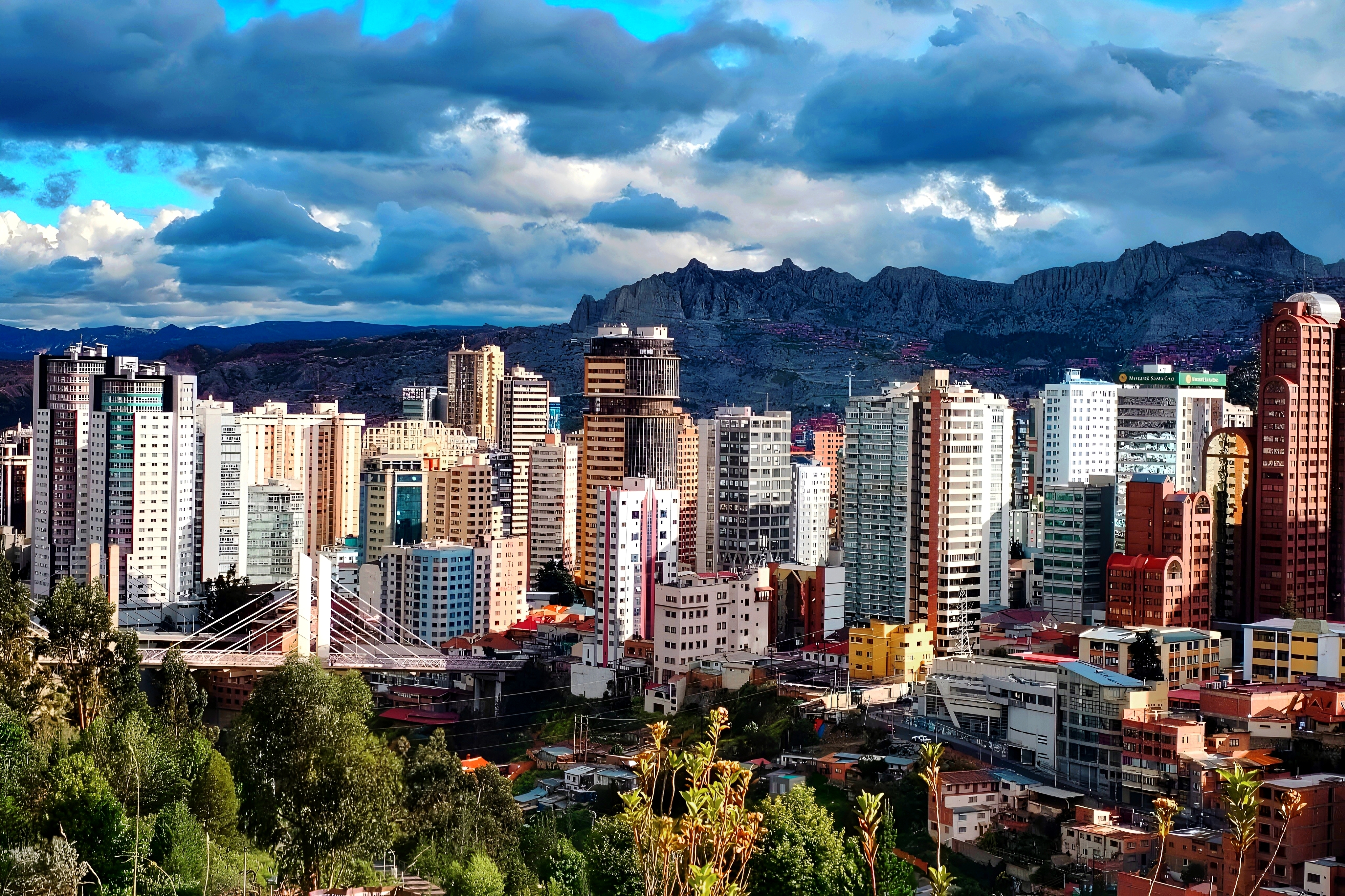
La Paz
High-altitude bowl city — cable cars with a view, markets, NGO expats — acclimatise slowly
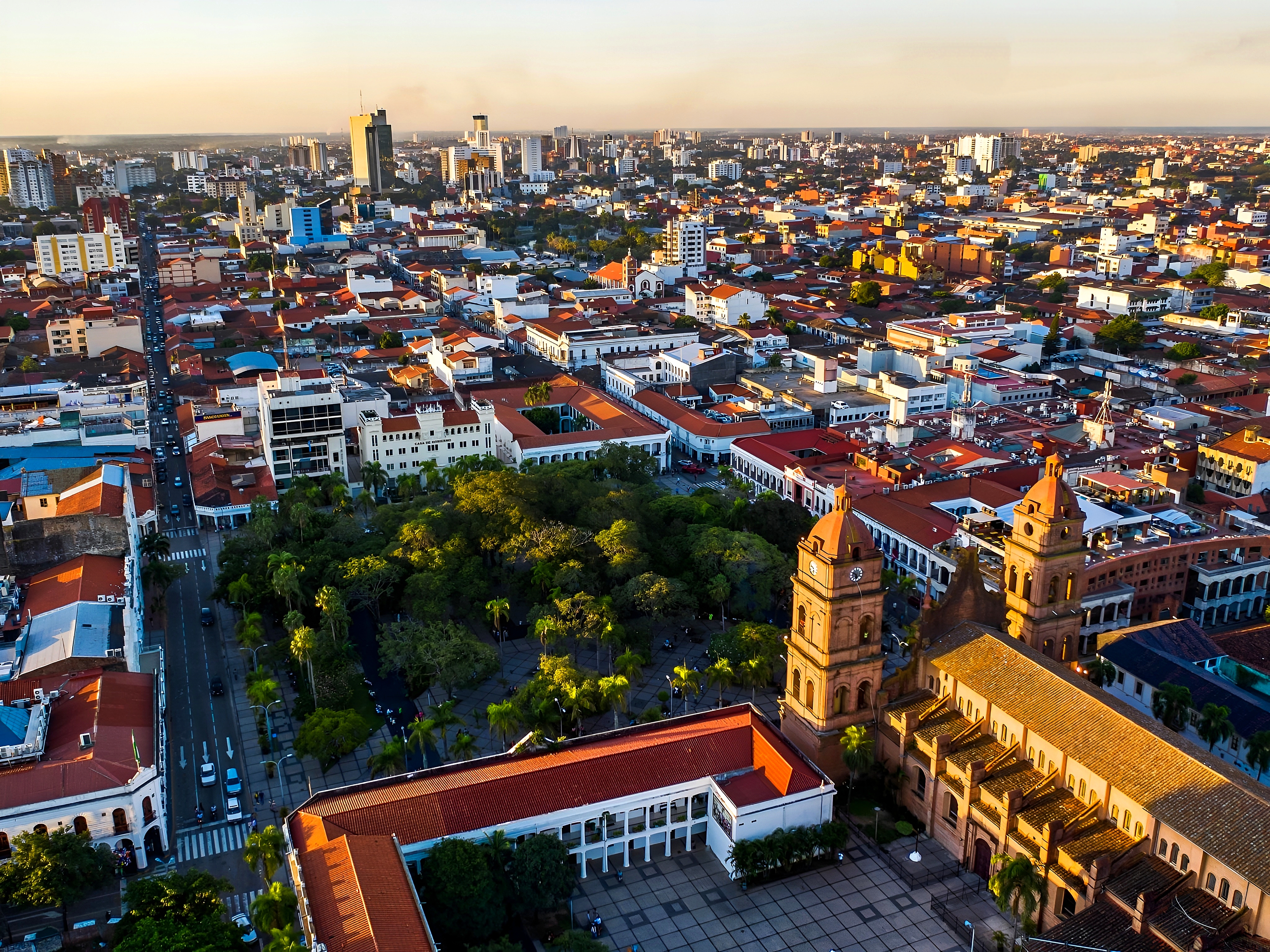
Santa Cruz
Lowland heat, faster growth, business-oriented — less altitude stress
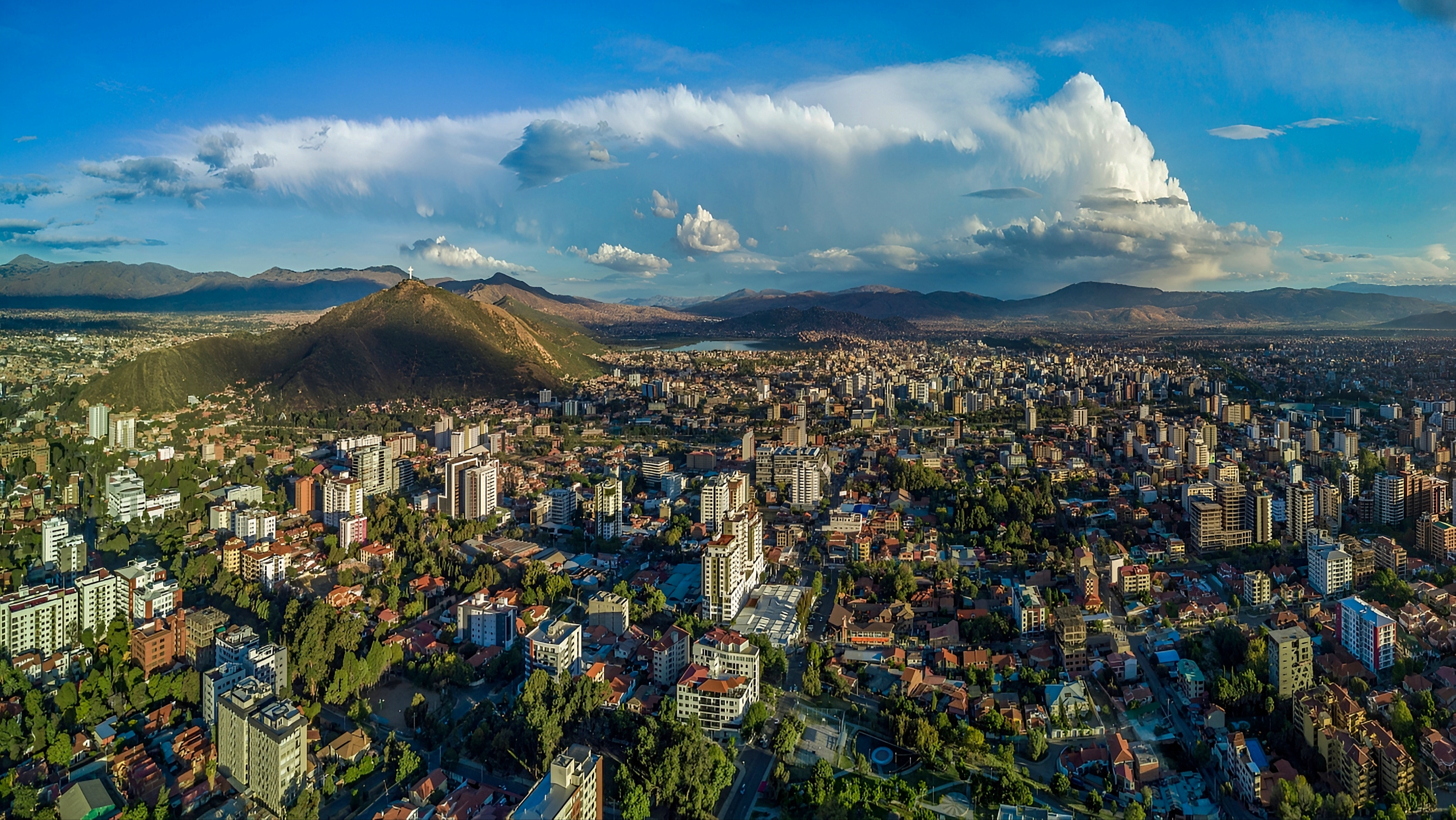
Cochabamba
Mild climate, affordable, university town — smaller nomad footprint
Neighbourhood picks
La Paz
Sopocachi
Walkable, cafes, expat-friendly — slightly lower in the bowl than Zona Sur for oxygen adaptation; check slope climbs to your flat.
Santa Cruz
Equipetrol
Upscale dining, offices, safer evening strolls — rents higher than outer zonas; good fibre.
Cochabamba
Cala Cala
Leafy, quieter — popular with middle-class families; good balance of price and amenities.
Banking & cash
Bolivian banks (Banco Unión, BISA, etc.) primarily serve residents with carnet de identidad. Tourist banking is limited — ATM withdrawals in BOB with foreign cards are common; fees vary. Carry cash backup in smaller towns.
US dollars are sometimes accepted in tourism zones; exchange at casas de cambio with receipt. Mobile money penetration is growing — ask locals for the current trusted apps.
Avoid relying on a single card — network outages happen. Wise may not offer BOB balance; plan USD/EUR abroad and draw locally. Keep small bills for markets.
Inform your bank before travel — Bolivia can trigger fraud blocks.
Health & safety
Public SNS exists; quality is uneven. Private clinics in La Paz and Santa Cruz handle most expat needs — pay out of pocket or use travel insurance that covers evacuation.
Altitude sickness is real in La Paz and Potosí — ascend gradually, hydrate, avoid heavy alcohol first days. Sorojchi pills help some; severe symptoms need oxygen/clinic.
Emergency numbers vary by city — save local clinic lines. Dental tourism is limited compared to Mexico — stick to reviewed providers.
Yellow fever, hepatitis, typhoid — consult a travel clinic before jungle trips. Dengue in lowlands — repellent and nets.
Culture & lifestyle
Indigenous dress and languages are sources of pride — photograph people only with permission. Bargaining in markets is normal; fixed prices in supermarkets.
Pace is slower — appointments slip. Lunch is the main meal; dinner lighter. Mate de coca is offered for altitude — polite to accept a sip.
Political discourse is passionate — listen respectfully. Road blockades (paros) can disrupt travel — follow local news and have flexible tickets.
Dress modestly in government buildings; carry copies of passport and migration slip when travelling domestically.
The real talk
The advantages
Very affordable by global standards
Stunning landscapes and cultural depth
Growing fibre in major cities
The challenges
Altitude in La Paz — not for everyone
Average internet outside prime zones
Bureaucracy in Spanish
Join the conversation
Connect with nomads and locals—search these hubs to get started.
Frequently asked questions
Tax snapshot
Long-term tax residency triggers depend on days, economic ties, and registration — Bolivian rules should be reviewed with a local accountant if you stay beyond casual tourism or earn locally. Most short-stay remote workers invoice abroad; clarify if you establish a local entity.
Community tips
Smaller English footprint than Buenos Aires — Spanish pays dividends. NGO and development circles in La Paz; Santa Cruz has more corporate expats. Respect coca leaf culture as legal traditional use — do not treat it flippantly.
This destination is perfect for…
Ready to work remotely in Bolivia?
Browse roles you can do from anywhere.
Browse jobs arrow_forward